



Modern Urban Identity with City Entrance Signs
City entrance signs are among the most important urban design elements that shape the first visual impression of a city. These structures, placed at the entrance points of cities, districts, industrial zones, campuses or private living areas, do more than simply provide direction. They also reflect the character, institutional identity and aesthetic approach of the area. Today, municipalities, industrial zones and private projects aim to create a stronger perception at city entrances. For this reason, design, material selection, lighting, dimensions and environmental harmony must be evaluated together. A well-designed entrance sign makes the area look more organized, modern and recognizable. Especially for institutions that want to build a strong urban identity, city entrance signs act as a permanent visual signature. These structures give visitors the message that they are entering a planned, strong and aesthetically designed area. When considered together with urban furniture, lighting poles, landscaping and wayfinding elements, they create a more complete public space experience.Contents
- What Are City Entrance Signs?
- Why Are They Important for Urban Identity?
- Key Points to Consider in Design
- Material Selection and Durability
- What Do Illuminated Entrance Signs Provide?
- Advantages for Municipalities and Corporate Areas
- Frequently Asked Questions
- Conclusion
What Are City Entrance Signs?
City entrance signs are architectural and visual identity structures positioned at the entrance points of cities, districts, neighborhoods, industrial zones or private areas. These structures are generally large-scale, easily visible from a distance and designed to represent the identity of the area where they are located. An entrance sign may include text, a logo, symbols, decorative forms, lighting and structural components. While some projects prefer simple and minimal lines, others highlight historical motifs, local symbols or modern geometric forms. At this point, the most important issue is that the design must be planned correctly not only visually but also technically. City entrance signs are located outdoors. Therefore, they must have a strong structure against wind, rain, sunlight, temperature changes and other environmental effects.Why Are They Important for Urban Identity?
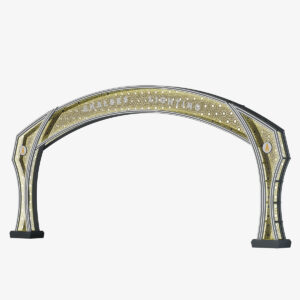 The identity of a city is not shaped only by buildings, roads or squares. Entrance points, signs, lighting elements, landscaping and public equipment also directly affect the perception of the city. For this reason, city entrance signs are considered one of the visible parts of urban identity. For broader insights on sustainable urban planning and design, you can refer to UN-Habitat’s urban planning and design resources.
When visitors enter a city, they first notice the road axis, environmental layout and visual elements at the entrance. If the entrance area looks disorganized, insufficient or lacks identity, a weak first impression is created. However, a strong entrance design makes the city perception more professional.
Entrance signs also support the promotional language of cities. In areas with tourism potential, local values can be emphasized. In industrial zones, trust, production power and corporate strength can be highlighted. In this way, a single structure gains function in terms of both guidance and image management.
The identity of a city is not shaped only by buildings, roads or squares. Entrance points, signs, lighting elements, landscaping and public equipment also directly affect the perception of the city. For this reason, city entrance signs are considered one of the visible parts of urban identity. For broader insights on sustainable urban planning and design, you can refer to UN-Habitat’s urban planning and design resources.
When visitors enter a city, they first notice the road axis, environmental layout and visual elements at the entrance. If the entrance area looks disorganized, insufficient or lacks identity, a weak first impression is created. However, a strong entrance design makes the city perception more professional.
Entrance signs also support the promotional language of cities. In areas with tourism potential, local values can be emphasized. In industrial zones, trust, production power and corporate strength can be highlighted. In this way, a single structure gains function in terms of both guidance and image management.
Key Points to Consider in Design
When designing city entrance signs, creating a large and eye-catching form is not enough. The design must be readable, safe, compatible with the environment and long-lasting. In addition, road width, vehicle speed, viewing distance and surrounding structures should be considered. A successful entrance sign design should include the following features:- A font that can be easily read from a distance should be used.
- The city or institution logo should be placed in a balanced way.
- Color selection should be compatible with the corporate identity.
- The structural system should be resistant to outdoor conditions.
- Proper lighting should be planned for night visibility.
- The scale should be proportional to the road and surrounding area.