



Modern Urban Identity with City Entrance Signs
City entrance signs are among the most important urban design elements that shape the first visual impression of a city. These structures, placed at the entrance points of cities, districts, industrial zones, campuses or private living areas, do more than simply provide direction. They also reflect the character, institutional identity and aesthetic approach of the area.
Today, municipalities, industrial zones and private projects aim to create a stronger perception at city entrances. For this reason, design, material selection, lighting, dimensions and environmental harmony must be evaluated together. A well-designed entrance sign makes the area look more organized, modern and recognizable.
Especially for institutions that want to build a strong urban identity, city entrance signs act as a permanent visual signature. These structures give visitors the message that they are entering a planned, strong and aesthetically designed area. When considered together with urban furniture, lighting poles, landscaping and wayfinding elements, they create a more complete public space experience.
Contents
- What Are City Entrance Signs?
- Why Are They Important for Urban Identity?
- Key Points to Consider in Design
- Material Selection and Durability
- What Do Illuminated Entrance Signs Provide?
- Advantages for Municipalities and Corporate Areas
- Frequently Asked Questions
- Conclusion
What Are City Entrance Signs?
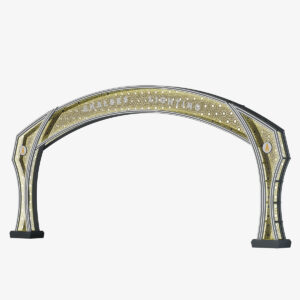
City entrance signs are architectural and visual identity structures positioned at the entrance points of cities, districts, neighborhoods, industrial zones or private areas. These structures are generally large-scale, easily visible from a distance and designed to represent the identity of the area where they are located.
An entrance sign may include text, a logo, symbols, decorative forms, lighting and structural components. While some projects prefer simple and minimal lines, others highlight historical motifs, local symbols or modern geometric forms.
At this point, the most important issue is that the design must be planned correctly not only visually but also technically. City entrance signs are located outdoors. Therefore, they must have a strong structure against wind, rain, sunlight, temperature changes and other environmental effects.
Why Are They Important for Urban Identity?
The identity of a city is not shaped only by buildings, roads or squares. Entrance points, signs, lighting elements, landscaping and public equipment also directly affect the perception of the city. For this reason, city entrance signs are considered one of the visible parts of urban identity. For broader insights on sustainable urban planning and design, you can refer to UN-Habitat’s urban planning and design resources.
When visitors enter a city, they first notice the road axis, environmental layout and visual elements at the entrance. If the entrance area looks disorganized, insufficient or lacks identity, a weak first impression is created. However, a strong entrance design makes the city perception more professional.
Entrance signs also support the promotional language of cities. In areas with tourism potential, local values can be emphasized. In industrial zones, trust, production power and corporate strength can be highlighted. In this way, a single structure gains function in terms of both guidance and image management.
Key Points to Consider in Design
When designing city entrance signs, creating a large and eye-catching form is not enough. The design must be readable, safe, compatible with the environment and long-lasting. In addition, road width, vehicle speed, viewing distance and surrounding structures should be considered.
A successful entrance sign design should include the following features:
- A font that can be easily read from a distance should be used.
- The city or institution logo should be placed in a balanced way.
- Color selection should be compatible with the corporate identity.
- The structural system should be resistant to outdoor conditions.
- Proper lighting should be planned for night visibility.
- The scale should be proportional to the road and surrounding area.
When these criteria are evaluated together, the entrance sign goes beyond being only a decorative element. It becomes an urban design solution that increases the value of the area, strengthens perception and improves the user experience.
Material Selection and Durability
In outdoor applications, material selection is as important as design. Since city entrance signs are used outdoors for many years, they must be resistant to rust, fading, bending and structural deformation. In this context, aluminum lighting poles stand out as complementary outdoor elements that support city entrance designs with their lightweight, durable and long-lasting structure.
Material selection should also be made according to the climate conditions of the region. In areas with high wind loads, the structural system must be calculated more strongly. In humid regions, corrosion resistance becomes more important. In cities with intense sunlight, color durability and surface protection should be prioritized.
Ease of maintenance should also be considered. Solutions that are easy to clean, allow part replacement when necessary and offer low maintenance costs in the long term are more advantageous. Companies such as Ekaldes, which develop production approaches in outdoor lighting and urban equipment, evaluate technical durability and aesthetic appearance together in such projects.
What Do Illuminated Entrance Signs Provide?
Illuminated entrance signs offer a strong advantage, especially in terms of night visibility. City entrances should be visible not only during the day but also in the evening and at night. Therefore, LED lighting, projector systems or integrated light solutions become an important part of the design.
Proper lighting makes the texts more readable. It also highlights the architectural form of the structure. In this way, the entrance point gains an aesthetic and safe appearance at night.
However, unnecessary light pollution should be avoided when planning lighting. The direction, power and color of the light should be selected carefully. This provides energy efficiency and prevents disturbing glare for drivers. LED technology offers low energy consumption and long service life at this point.
Advantages for Municipalities and Corporate Areas
City entrance signs are strong promotional tools for municipalities, organized industrial zones, university campuses, residential projects, tourism regions and private facilities. These structures make the entrance point more visible and increase the corporate value of the area.
For municipalities, entrance signs contribute to city branding. Especially on newly arranged boulevards, squares and entrance roads, these applications create a modern appearance. Designs supported by local symbols also make the cultural memory of the city more visible.
In corporate areas, entrance signs strengthen professional perception. In organized industrial zones, they represent production power; on campuses, they represent institutional order; and in residential projects, they represent trust and prestige. Therefore, instead of using a standard design for every project, a custom solution should be developed for each area.
Frequently Asked Questions
What are city entrance signs used for?
City entrance signs make the identity of the area visible. They also provide important contributions in terms of direction, promotion, aesthetic appearance and corporate perception.
What materials are city entrance signs made of?
Depending on the project, steel construction, aluminum, composite panels, stainless metal, durable paint systems and LED lighting components can be used. Material selection is determined according to climate conditions and design expectations.
Should illuminated entrance signs be preferred?
In areas where night visibility is required, illuminated entrance signs provide more effective results. However, light intensity, color temperature and direction must be planned correctly. This ensures both aesthetic appearance and energy efficiency.
Why are entrance signs important for municipalities?
For municipalities, entrance signs are public design elements that strengthen urban identity. They improve the first impression of the city, make the area look more organized and support the perception of a branded city.
What should be considered in entrance sign design?
Readability, scale balance, logo use, material durability, lighting quality and harmony with the environment should be considered. Road safety and viewing distance must also be evaluated.
Conclusion
City entrance signs should not be considered only as decorative elements in modern urban design. These structures are strategic visual identity elements that determine the first impression of cities and corporate areas. With the right design, durable materials, controlled lighting and environmentally compatible application, entrance points gain a stronger character.
For municipalities, industrial zones and private projects, entrance signs are a long-term urban investment. These structures remain visible for years and deliver the same message to thousands of people every day. With its production approach in outdoor lighting and urban equipment, Ekaldes contributes to aesthetic, durable and functional solutions at city entrances. Therefore, city entrance signs are an effective and permanent option for projects that aim to strengthen urban identity.