



Galvanized Steel Lighting Poles: Durable and Long-Lasting Solutions
The material used for lighting poles directly affects safety, maintenance requirements and the overall service life of an outdoor lighting system. Galvanized steel lighting poles combine high mechanical strength with effective corrosion protection, making them a reliable solution for roads, streets, parks, squares, industrial facilities and various infrastructure projects.
A properly designed lighting pole does more than simply support a luminaire. It must also withstand wind loads, rainfall, temperature changes and environmental conditions while maintaining structural stability. For this reason, material quality, surface protection and engineering calculations should all be evaluated together.
Ekaldes provides lighting pole solutions developed according to different project requirements and site conditions. Pole height, body shape, bracket structure, luminaire compatibility and surface protection options can all be considered as part of an integrated lighting solution.
Table of Contents
- What Are Galvanized Steel Lighting Poles?
- Why Is Galvanization Important?
- Advantages of Galvanized Steel Lighting Poles
- Where Are Galvanized Steel Lighting Poles Used?
- How to Choose the Right Lighting Pole
- Installation and Maintenance
- Ekaldes Lighting Pole Solutions
- Frequently Asked Questions
What Are Galvanized Steel Lighting Poles?
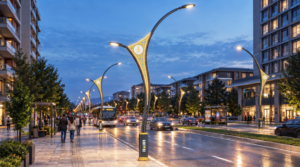
Galvanized steel lighting poles are structural lighting components manufactured from steel and coated with zinc to protect the surface against corrosion. One of the most widely used protection methods is hot-dip galvanizing, in which fabricated steel components are immersed in molten zinc.
During this process, a protective coating forms on the steel surface. This layer helps protect the underlying material from moisture, oxygen and various environmental factors that may cause corrosion.
Depending on project requirements, lighting poles can be manufactured in different forms such as round, conical, polygonal or custom-designed structures. They may also be produced with single brackets, double brackets or configurations designed to carry multiple luminaires.
Therefore, a lighting pole should not be selected based only on appearance. Pole height, wall thickness, base plate design, anchoring system, luminaire weight and environmental loads must also be considered.
Why Is Galvanization Important?
Steel provides excellent mechanical strength, making it suitable for structural outdoor applications. However, unprotected steel can corrode when exposed to moisture and oxygen over long periods.
Galvanization creates a protective zinc layer on the surface of the steel. This coating acts as a physical barrier between the steel and the surrounding environment. It also provides additional corrosion protection in areas where small scratches or minor surface damage may occur.
This feature is particularly important for outdoor lighting infrastructure, which is constantly exposed to environmental conditions. Rain, snow, humidity, industrial pollution, temperature changes and coastal environments can accelerate surface deterioration.
For this reason, the environmental conditions of the project site should be considered before selecting the appropriate surface protection system. A suitable galvanization solution can help reduce maintenance requirements and support a longer service life.
Advantages of Galvanized Steel Lighting Poles
Galvanized steel poles provide both technical and economic advantages in public infrastructure projects, industrial facilities and commercial developments. Their high mechanical strength makes them suitable for applications where taller poles, heavier luminaires or extended brackets are required.
Key advantages of galvanized steel lighting poles include:
- High mechanical strength for demanding outdoor applications
- Effective protection against corrosion
- Resistance to different weather conditions
- Compatibility with various luminaire and bracket configurations
- Reduced long-term maintenance requirements
- Different pole heights and body designs
- Optional painted finishes for architectural projects
- Suitability for road, street and industrial lighting
When selecting a lighting pole, it is important not to focus exclusively on the initial purchase price. Maintenance, repair and replacement costs throughout the service life of the system should also be considered.
For this reason, galvanized steel structures can provide an effective solution for projects where long-term durability and operational reliability are priorities.
Where Are Galvanized Steel Lighting Poles Used?
Thanks to their strong structural characteristics, galvanized poles can be used in a wide range of outdoor environments.
Common application areas include roads, boulevards, intersections, parking areas, industrial zones and facility surroundings. They can also be used in municipal projects, public squares, pedestrian areas, sports facilities, ports and large-scale landscaping projects.
Pole specifications vary according to the application.
For example, pedestrian areas and parks may require lower poles combined with controlled light distribution. Wide roads, highways and intersections may require taller poles, stronger luminaires and different bracket configurations.
In industrial areas, additional factors such as wind load, environmental pollution, chemical exposure and maintenance accessibility may become more important.
Therefore, using the same lighting pole configuration for every project is not recommended. Engineering calculations should be performed according to the specific conditions of the installation area.
How to Choose the Right Galvanized Steel Lighting Pole
Selecting the right pole requires both lighting calculations and structural engineering considerations. The intended use of the area, road width, pole spacing and required illumination levels should be determined first.
After that, factors such as luminaire power, weight, light distribution and bracket configuration should be evaluated.
The following criteria should be considered during the selection process:
- Regional wind and climate conditions
- Pole height and structural geometry
- Number and weight of luminaires
- Bracket length and configuration
- Foundation and anchor bolt system
- Quality of the galvanized coating
- Maintenance access requirements
- Grounding and electrical infrastructure
- Project specifications and applicable standards
Galvanization alone does not determine the overall quality of a lighting pole. Welding quality, manufacturing tolerances, structural calculations, connection points and foundation design also play an important role in safe and reliable performance. In Turkey, outdoor and public lighting projects should also be evaluated in line with the relevant regulations and technical requirements published by the Ministry of Energy and Natural Resources.
For infrastructure projects requiring specific technical standards, TEDAŞ approved lighting poles can also be evaluated according to project requirements.
Installation and Maintenance of Galvanized Steel Lighting Poles
Although galvanized steel lighting poles generally require relatively low maintenance, periodic inspections are still important.
Before installation, foundation dimensions, anchor bolt positions and cable entry points should be checked according to the project specifications. Once the pole has been installed, vertical alignment, connection points, access doors and grounding systems should also be inspected.
Periodic maintenance should include checks for:
- Loose bolts and connections
- Mechanical impact damage
- Surface scratches
- Corrosion around damaged areas
- Foundation condition
- Access door condition
- Grounding connections
Lighting poles exposed to vehicle impacts, construction work or severe weather conditions should also be inspected after such events.
If the galvanized coating is damaged, suitable repair methods should be applied to restore surface protection. Regular inspections help identify potential problems before they develop into larger structural or operational issues.
Ekaldes Galvanized Steel Lighting Pole Solutions
Every outdoor lighting project has different requirements in terms of technical specifications, architectural expectations, environmental conditions and budget.
Ekaldes approaches galvanized steel lighting poles as part of a complete lighting infrastructure rather than evaluating pole height alone. Pole geometry, bracket type, luminaire compatibility, installation details and surface protection options can all be configured according to project requirements.
From road and street lighting projects to industrial facilities and urban lighting applications, Ekaldes develops solutions that combine functionality, durability and visual consistency.
Project-specific engineering helps ensure that the selected lighting pole is compatible with both the lighting system and the environmental conditions of the installation area.
Frequently Asked Questions
Do galvanized steel lighting poles rust?
Galvanized coatings provide significant protection against corrosion. However, their performance depends on coating quality, environmental conditions, humidity, salt exposure and mechanical damage.
If the zinc coating is seriously damaged and not repaired, corrosion may eventually develop on exposed steel surfaces.
How long do galvanized steel lighting poles last?
There is no single service life that applies to every galvanized lighting pole. Lifespan depends on coating thickness, environmental conditions, design quality and maintenance practices.
Properly designed and maintained galvanized steel structures can remain in service for many years under suitable environmental conditions.
What height should a lighting pole be?
Pole height depends on the application and lighting requirements.
Pedestrian areas, parks and landscaping projects generally use lower poles, while highways, large roads and intersections may require taller structures.
The appropriate height should be determined through photometric calculations and site-specific engineering.
Can galvanized steel lighting poles be painted?
Yes. Galvanized steel lighting poles can be painted when appropriate surface preparation, primer and coating systems are used.
Painting can provide additional design flexibility and allow the pole to match architectural concepts or corporate color schemes.
How are galvanized lighting poles maintained?
Lighting poles should be visually inspected at regular intervals. Connections, access doors, base sections, coating surfaces and signs of mechanical damage should be checked.
Damaged areas should be repaired using suitable methods, while loose components should be tightened when necessary.
What affects the price of galvanized steel lighting poles?
Pricing depends on several technical factors, including:
- Pole height
- Steel thickness
- Pole geometry
- Number of brackets
- Galvanizing process
- Paint or coating requirements
- Anchor systems
- Order quantity
- Project-specific engineering requirements
Special designs and structural calculations may also influence the final cost.
Conclusion
Galvanized steel lighting poles provide a reliable combination of structural strength, corrosion resistance and design flexibility for outdoor lighting projects. They can be used in roads, streets, parks, industrial facilities, public areas and many other infrastructure applications.
However, choosing a durable lighting pole requires more than simply selecting a galvanized surface. Structural design, luminaire compatibility, foundation engineering, installation quality and periodic inspections should all be considered together.
With project-oriented lighting pole solutions, Ekaldes supports outdoor lighting applications that prioritize durability, safety, technical compatibility and long-term performance.