



TEDAŞ Approved Lighting Poles: Features and Areas of Use
Outdoor lighting systems play an important role in creating safer, more organized and visually appealing urban environments. Especially in roads, streets, squares, parks and public infrastructure projects, lighting poles must meet not only aesthetic expectations but also technical project requirements. In this context, TEDAŞ approved lighting poles stand out as reliable solutions for municipalities, contractors, engineering companies and infrastructure projects that require compliance with defined technical standards.
TEDAŞ publishes approved type project lists covering different lighting pole designs, dimensions and technical specifications. Therefore, type project approval has become an important criterion in professional outdoor lighting investments. Ekaldes develops modern, classic and decorative lighting pole solutions designed to meet both technical and architectural requirements in different urban environments.
Table of Contents
- What Are TEDAŞ Approved Lighting Poles?
- What Does TEDAŞ Type Project Approval Mean?
- Technical Features of Lighting Poles
- Where Are Lighting Poles Used?
- Decorative and Modern Lighting Pole Options
- How to Choose the Right Lighting Pole
- Ekaldes Lighting Pole Solutions
- Frequently Asked Questions
- Conclusion
What Are TEDAŞ Approved Lighting Poles?
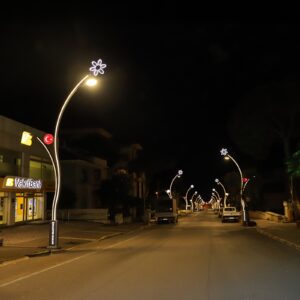
TEDAŞ approved lighting poles refer to lighting pole systems designed and evaluated according to the technical criteria specified within the relevant approved type project. These systems contribute to establishing controlled, reliable and properly planned outdoor lighting infrastructure for roads, streets and other public areas.
A lighting pole must do more than simply hold a luminaire at a certain height. The pole body, base plate, foundation connection, bracket structure, luminaire placement and resistance to environmental conditions should all be considered as part of the overall design.
In addition, geographical conditions, wind loads, installation area and intended use can directly influence the selection of a suitable lighting pole. For this reason, lighting pole selection should not be based only on appearance. Technical specifications and project requirements should always be reviewed before making a final decision.
What Does TEDAŞ Type Project Approval Mean?
A type project defines technical drawings, calculations, dimensions and installation details for a specific product or system within a standardized project structure. TEDAŞ publishes approved type project lists containing different lighting pole designs and technical configurations.
Current approved lighting pole type projects can be reviewed in the official TEDAŞ Type Project Approval List.
TEDAŞ type project approved lighting poles help project designers, contractors and public authorities work with predefined technical information. However, every infrastructure project may also include its own tender documentation, technical specifications and site-specific requirements.
Some of the main advantages of type project approval include:
- Standardized technical drawings
- Clearly defined pole dimensions and connection details
- Easier product selection according to project requirements
- Reduced technical uncertainty during implementation
- More controlled manufacturing and installation processes
- A common technical framework between project stakeholders
Therefore, type project approval helps ensure that lighting poles are evaluated according to technical compatibility rather than only price or visual appearance.
Current type project approvals can also be reviewed through the official TEDAŞ Type Project Approval List.
Technical Features of Lighting Poles
The performance of a lighting pole depends on several factors, including the material used, manufacturing method, surface protection system and installation details. Galvanized steel lighting poles are frequently preferred in road, street and infrastructure projects because of their mechanical strength and durability against outdoor conditions.
Aluminum lighting poles can also provide advantages in applications where lightweight construction, corrosion resistance and design flexibility are important.
When determining the appropriate pole height, several factors should be considered. These include road width, lighting calculations, luminaire power, light distribution and the size of the area that needs to be illuminated.
Important technical features include:
- Pole material
- Pole body dimensions
- Base plate specifications
- Pole height
- Bracket and arm configuration
- Luminaire connection details
- Wind load resistance
- Corrosion protection
- Electrical access door
- Cable entry points
- Foundation and anchor bolt design
Lighting pole wind load calculation is especially important in areas exposed to strong wind conditions. Pole height, luminaire dimensions and bracket design directly affect the structural load acting on the pole.
Ekaldes develops lighting pole solutions using materials such as aluminum and galvanized steel. Depending on project requirements, surface protection and electrostatic powder coating applications can also be used to improve durability and provide different architectural finishes.
Where Are Lighting Poles Used?
TEDAŞ approved lighting poles can be used in a wide range of public and infrastructure lighting applications. However, pole height, luminaire type and design should be selected according to the characteristics of each project.
For example, road and street lighting projects primarily focus on visibility, traffic safety and uniform light distribution. Parks and public squares, on the other hand, require a balance between illumination performance and architectural appearance.
Typical application areas include:
- Urban roads
- Main streets
- Residential streets
- Intersections
- Connection roads
- Parks
- Pedestrian areas
- Public squares
- Government facilities
- Campuses
- Residential developments
- Parking areas
- Industrial facilities
For public projects, lighting poles should be selected according to technical specifications, environmental conditions and the architectural character of the surrounding area.
Decorative and Modern Lighting Pole Options
Lighting poles are also an important part of urban furniture. Their visual appearance during daylight hours can directly influence the overall character of a street, square or public space.
For this reason, TEDAŞ type approved decorative lighting poles can be preferred in projects where both technical requirements and architectural design are important.
Decorative lighting poles should be selected according to the surrounding architectural style. Classic models can complement historical districts, traditional streets and public squares. Modern designs with clean lines can be more suitable for contemporary urban environments, residential developments and commercial areas.
Ekaldes offers modern, classic and decorative lighting pole alternatives for different architectural concepts. This provides designers and project owners with the flexibility to select products according to both lighting requirements and visual identity.
How to Choose the Right Lighting Pole
The first step in choosing the correct lighting pole is understanding the requirements of the project area. Technical specifications, installation conditions, pole height, material and luminaire characteristics should then be evaluated together.
A wide road with heavy traffic, for example, requires a completely different lighting approach than a pedestrian pathway inside a park. Higher poles and road lighting luminaires with appropriate optical distribution may be required on major roads. Pedestrian areas may require lower poles and more controlled lighting.
Several factors should therefore be evaluated:
- Lighting calculations
- Required pole height
- Wind load
- Environmental conditions
- Luminaire weight
- Bracket design
- Pole material
- Corrosion protection
- Architectural requirements
- Technical specifications
The scope of the approval documents should also be verified before selecting a product. Approval for a specific lighting pole model or type project does not necessarily mean that every product manufactured by the same company is covered by the same approval.
For this reason, project number, product model, technical drawings and current approval status should be checked before procurement.
Ekaldes Lighting Pole Solutions
Ekaldes develops solutions for urban lighting, signalization systems and different infrastructure applications. Its product range includes modern, classic and decorative lighting poles designed for roads, streets, parks, squares and various public areas.
When selecting TEDAŞ approved lighting poles, project owners should consider not only the aesthetic appearance of the product but also its technical characteristics, material specifications and approval scope.
Ekaldes can provide different alternatives in terms of pole height, body design, color, material and luminaire configuration according to project requirements.
This approach helps create lighting infrastructure that integrates with the surrounding architecture while maintaining technical performance and long-term durability.
For more information about outdoor lighting systems, technical applications and industry developments, you can explore Ekaldes Articles.
For additional information about outdoor lighting systems, engineering solutions and sector developments, you can also explore the Ekaldes Blog.
Frequently Asked Questions
What is a TEDAŞ approved lighting pole?
A TEDAŞ approved lighting pole is a lighting pole solution whose technical drawings and project details have been evaluated within the scope of an approved type project. The approval scope should always be checked according to the relevant model and project documentation.
How can TEDAŞ type project approval be checked?
Current approvals can be reviewed through the official TEDAŞ type project approval lists. Project owners can also request the approval document, technical drawings and project number directly from the manufacturer.
Are all lighting poles TEDAŞ approved?
No. Approval does not automatically apply to every lighting pole produced by a manufacturer. It may apply only to a specific model, design or type project.
Where are TEDAŞ approved lighting poles used?
They can be used in road, street, intersection, park, square and other public lighting projects depending on the project requirements and technical specifications.
What should the height of a lighting pole be?
Lighting pole height depends on road width, lighting calculations, luminaire type, optical distribution and the characteristics of the installation area. Different projects may therefore require different pole heights.
Why is wind load calculation important for lighting poles?
Wind load directly affects the structural forces acting on the pole. Pole height, luminaire dimensions, bracket length and local wind conditions should therefore be considered during structural calculations.
Should galvanized steel or aluminum lighting poles be preferred?
The correct choice depends on project requirements. Galvanized steel poles offer high mechanical strength and durability, while aluminum poles can provide advantages in terms of weight, corrosion resistance and design flexibility.
Conclusion
TEDAŞ approved lighting poles provide an important solution for outdoor lighting projects where technical compliance, durability and controlled implementation are essential. However, choosing the correct product requires evaluating the approval scope, technical specifications, pole height, material, wind load and site conditions together.
Ekaldes offers modern, classic and decorative lighting pole solutions for roads, streets, parks, squares and various public spaces. Selecting a lighting pole according to both technical requirements and the architectural character of the project contributes to creating durable, efficient and visually consistent urban lighting infrastructure.