



Modern Lighting Poles for Aesthetic, Safe and Energy-Efficient Spaces
Table of Contents
- What Are Modern Lighting Poles?
- Why Are Modern Lighting Poles Preferred?
- Choosing Lighting Poles by Application
- Materials and Durability
- Energy Efficiency with LED Technology
- Architectural Harmony and Urban Aesthetics
- Frequently Asked Questions
- Conclusion
What Are Modern Lighting Poles?
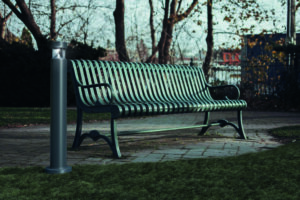
Modern lighting poles are structural lighting elements designed to improve visibility, safety and architectural appearance in outdoor spaces. Their purpose is not limited to supporting a luminaire at a specific height. They also complement the visual identity of streets, parks, gardens, squares, residential areas and commercial projects.
Traditional lighting poles are generally designed with functionality as the primary consideration. Modern models, however, combine technical performance with contemporary and aesthetic forms. Project owners therefore consider not only illumination levels but also design, material quality, energy consumption and compatibility with the surrounding environment.
Outdoor lighting poles become particularly efficient when combined with LED luminaires. Their low energy consumption and long service life can reduce both operating and maintenance costs. These advantages make modern poles suitable for projects ranging from municipal infrastructure to private residential developments.
Why Are Modern Lighting Poles Preferred?
Outdoor lighting is not merely used to improve visibility after dark. A properly planned lighting system increases the sense of security, makes spaces easier to use and supports an organised visual appearance. Modern lighting poles therefore perform an important function in both public and private spaces.
Pedestrian paths, car parks, gardens, parks and streets require controlled and balanced illumination at night. Insufficient lighting can create safety risks and reduce the usability of an area. Correctly positioned lighting poles distribute light evenly and help minimise dark spots.
The main advantages of modern lighting poles include:
- Improving visibility and safety
- Supporting contemporary architectural designs
- Providing energy savings with LED luminaires
- Resisting changing outdoor weather conditions
- Creating an organised appearance in public spaces
- Reducing long-term maintenance requirements
These benefits directly affect not only product selection but also the overall quality and sustainability of an outdoor project.
Choosing Lighting Poles by Application
Every outdoor space has different lighting requirements. Modern lighting poles should therefore be selected according to the dimensions, purpose and environmental characteristics of the project area. A pole designed for a pedestrian path will not necessarily provide the appropriate performance for a wide road or public square.
Decorative models with soft light distribution are generally preferred in parks and gardens. These poles should be compatible with the surrounding landscape while making pedestrian routes and seating areas clearly visible. The objective is to create a comfortable atmosphere without producing excessive brightness or glare.
In street and road projects, illumination levels, pole height, luminaire output and beam angle must be planned more technically. Vehicle and pedestrian traffic requires consistent light distribution. Taller poles and more powerful LED luminaires may therefore be needed in wide and heavily used areas.
Residential complexes, hotels, campuses and commercial developments require a balance between safety and visual identity. Entrances, car parks, pedestrian paths and landscaped areas can create a more coherent appearance when they share the same design language. Project-specific product selection helps ensure that technical and aesthetic requirements are addressed together.
Materials and Durability of Modern Lighting Poles
Design is not the only factor that should be considered when choosing a lighting pole. Outdoor products are continuously exposed to rain, wind, humidity, sunlight and temperature changes. Material quality is therefore essential for dependable and long-lasting use.
Modern lighting poles are commonly manufactured from steel, galvanised steel or aluminium. Steel poles provide high structural strength, while galvanised surfaces help reduce corrosion and rust. Aluminium lighting poles are particularly suitable for contemporary and decorative projects due to their lightweight structure, corrosion resistance and modern appearance.
Surface treatments also influence product durability. Applications such as electrostatic powder coating improve resistance to outdoor conditions while helping preserve colour and surface quality. The selected coating should be suitable for the climate and environmental conditions of the installation area.
Incorrect material selection may cause premature corrosion, surface deterioration or increased maintenance requirements. Local climate, wind load, installation surface and intensity of use should therefore be evaluated during the planning stage.
Modern lighting poles are commonly manufactured from steel, galvanised steel or aluminium. Steel poles provide high structural strength, while galvanised surfaces help reduce corrosion and rust. Aluminium lighting poles are particularly suitable for contemporary and decorative projects due to their lightweight structure, corrosion resistance and modern appearance.
Energy Efficiency with LED Technology
Modern lighting poles become considerably more efficient when combined with LED technology. LED luminaires consume less electricity than many conventional light sources and offer a longer service life. Their extended operating life also helps reduce replacement and maintenance costs.
According to information published by the Turkish Ministry of Energy and Natural Resources, the use of LED luminaires in public lighting systems can deliver significant energy savings. LED transformation projects can therefore support both lower operating costs and national energy-efficiency goals.
Energy efficiency in outdoor lighting is not only an economic advantage. It is also an important component of sustainable urban development because street, park and public-space lighting can represent a considerable share of electricity consumption.
LED systems can direct light more precisely towards the intended surface. This reduces unnecessary light loss and helps limit light pollution. Controlled light distribution is especially important in parks, gardens, roads, residential areas and public squares.
Solar-powered lighting systems may also be considered for suitable projects. These systems use solar energy and can reduce cabling requirements. However, solar lighting is not appropriate for every location. Local climate, daily sunlight duration, battery capacity and required illumination levels must be assessed before installation.
According to the International Energy Agency, LED efficiency has improved considerably in recent years. Therefore, using LED luminaires in outdoor lighting projects can support lower energy consumption and long-term operational efficiency.
Design, Architectural Harmony and Urban Aesthetics
Lighting poles remain visible architectural elements during daylight hours. Outdoor lighting poles should therefore not be evaluated solely according to their nighttime performance. Their shape, colour, height, proportions and luminaire structure also influence the daytime appearance of the surrounding landscape.
Simple, strong and timeless designs are frequently preferred in contemporary urban projects. Minimalist forms can remain visually relevant for longer periods and adapt more easily to different architectural environments.
Distinctive lighting poles may be selected for city squares and entrance areas. Softer and more understated designs are often suitable for parks and pedestrian paths. Decorative poles used in gardens, hotels and residential developments can strengthen the perceived quality and character of the space.
A properly selected lighting pole does more than illuminate its surroundings. It contributes to a safer, more organised and contemporary environment. Modern outdoor lighting poles should therefore be treated as both technical equipment and an integral component of architectural design.
Frequently Asked Questions
Where are modern lighting poles used?
Modern lighting poles are used in parks, gardens, streets, roads, squares, residential complexes, car parks, campuses and commercial areas. Pole height, luminaire output and design may vary according to the application.
How tall should a lighting pole be?
The appropriate height depends on the dimensions and purpose of the area. Shorter poles may be sufficient for gardens and pedestrian paths, while taller poles are generally required for roads, streets and wide public spaces.
Which materials are used for modern lighting poles?
Outdoor lighting poles are commonly manufactured from steel, galvanised steel and aluminium. Material selection should be based on climate conditions, structural requirements, architectural expectations and the installation environment.
Do LED lighting poles save energy?
Yes. LED luminaires generally consume less electricity than conventional lighting systems. Their longer service life can also reduce replacement frequency and maintenance costs.
Should solar or electrically powered lighting poles be selected?
The correct choice depends on the project. Grid-connected systems provide continuous and powerful illumination. Solar lighting poles can reduce cabling requirements but require sufficient sunlight, suitable battery capacity and careful technical planning.
What should be considered when selecting a modern lighting pole?
The application area, pole height, material quality, LED compatibility, weather resistance, wind load, installation surface and architectural design should be evaluated together.
Conclusion
Modern lighting poles combine aesthetics, safety and energy efficiency in outdoor projects. Correctly selected poles improve nighttime visibility while strengthening the architectural quality of parks, gardens, roads, streets, residential areas and public squares.
Pole design, material, height, LED compatibility and resistance to outdoor conditions should be examined carefully before making a selection. Project-compatible modern lighting poles can provide lower maintenance costs, efficient illumination and a stronger visual impact over the long term. Ekaldes supports functional and aesthetically coherent outdoor spaces with lighting solutions developed for different project requirements.